An Ode to Kiki.
Since it's Miyzaki season, I wanted to write on my most beloved film of his.

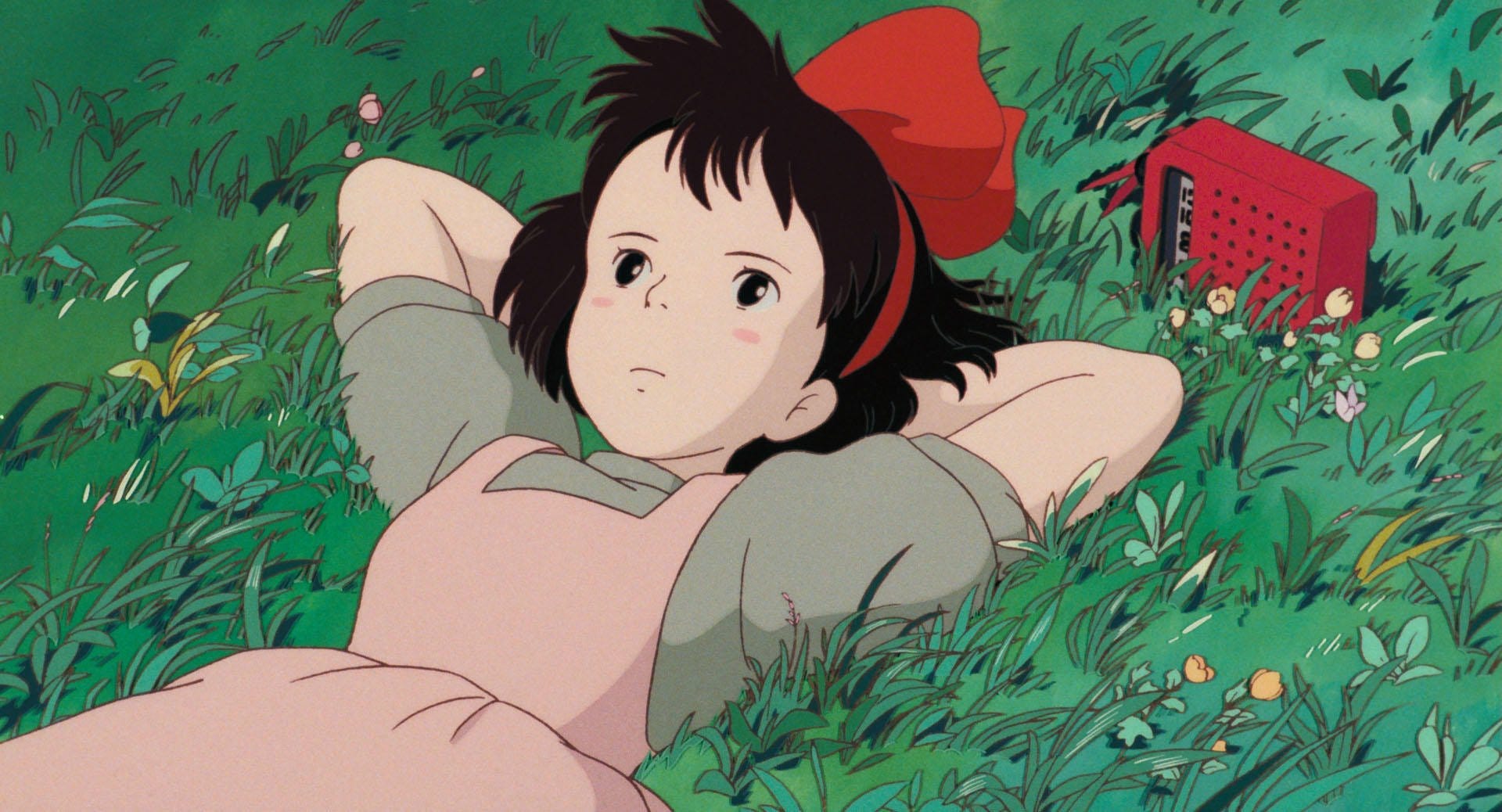
I must admit, the overall stakes of Hayao Miyazaki’s 1989 film Kiki’s Delivery Service are low. When put up against the animation titan’s other works: the environmentalist epic Princess Mononoke, Spirited Away which is about a girl trying to save her parents and herself, even the more calm My Neighbour Totoro has the looming stakes of a parent’s illness.
Kiki’s stakes are the utter terrors of trying to make it alone, which as a thirteen year old witch who has now come-of-age, can prove to be deeply difficult. Despite Miyazaki placing the viewer in a world in which it is universally understood that a witch must leave the house at such a young age and that every town must have one witch, there is a magnificent, deeply enchanting regularness to this film that I believe to be its purest superpower.
Community is at the heart of what makes Kiki a great heroine, at the beginning of the film she is surrounded by family and neighbours to see her off, leaving steadfast for a town near the sea. Her naivete shines through as she first finds the town, physically crashing into it, therefore not greeted with great joy by the locals. Except for our darling Manic Pixie Dream Pilot Tombo, that Kiki needs some time to warm up to. It is not until she finds the bakery and meets Osono, who is heavily pregnant (even though it does not benefit the plot(!)), who offers her a place where soft glimmers of a home make its way back into the young witch’s life.
Through the titular delivery service, similarly to Jihiro working to regain her life back in Spirited Away, Kiki is positioned to be of use to the community and town she wants to be the witch for. A pointed theme for Miyazaki is for kids to know what it takes to be a part of something bigger. Unlike the more fantastical stories, this film asks what is it to be of use to society and can you be of use to those around you if you are at your limit. The answer is pointedly no. Though this is a coming of age story, to resent what your life is so much that you lose your gift, is a deeply adult experience. What is to truly not be of value anymore and how do you regain the will to exist on, once you’ve reached that stage? These are questions that I feel aren’t poised or articulated cinematically in other Ghibli pieces.
There is a huge strength to the way in which Kiki is not punished for her burnout, or how it is not swept under the rug, the way a lesser filmaker might have done. Immeasurable devastation is what I feel when she first loses her powers, my heart drops in bitter harmony with the sharp plop onto the floor as she attempts to fly on her broom after realising that she doesn’t understand her fabulous cat Jiji anymore. The movie leans into the doom and heartbreak of a young teenage girl that feels so thoroughly all consuming.
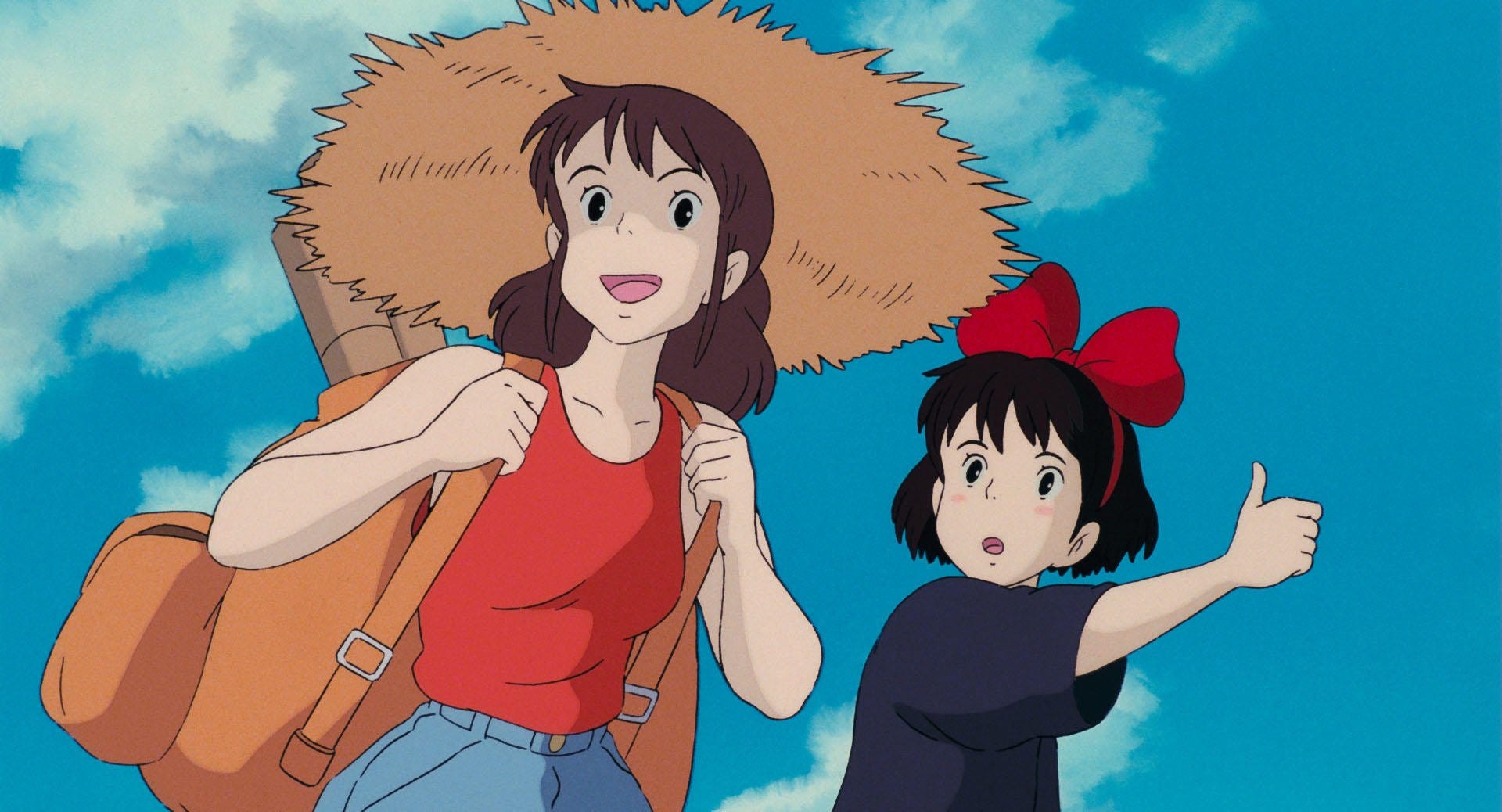
Through her friendship with the cool older artist lady Ursula, our young witch goes on to learn that art is not so dissimilar from flying, that the key is to release yourself of the expectations of others. She lost herself, she may have even decided that she failed, but all this just means it’s her own destiny to find herself once again. Despite Kiki’s job being for the wellbeing and benefit of others, it is for herself that she must find the love to fly again. It continues like this, you are your best self for both you and your loved ones. The film is ultimately a piece about a young girl learning not to put everything on her own shoulders, so that she can continue the cyclical nature of human reciprocity.
I wouldn’t know if Miyzaki would refer to himself as a humanist but I know that I would. My favourite of his works are those that remind me to be kind to the people, creatures and the nature that surrounds me, which is what makes Kiki’s Delivery Service so special, since it’s a movie that makes me want to add myself to that list.